I thought I was prepared: My safari accommodation had internet, a back-up generator, and staff on hand to help sort out any digital work needs. What could go wrong?
Quick disclosure: This blog includes affiliate links to products I love and recommend. As an Amazon Associate, I earn from qualifying purchases, and if you choose to purchase through these links, I may earn a small commission at no additional cost to you. This helps support the work behind this blog. Thank you!
She proposed “Christmas safari?” and I said yes.
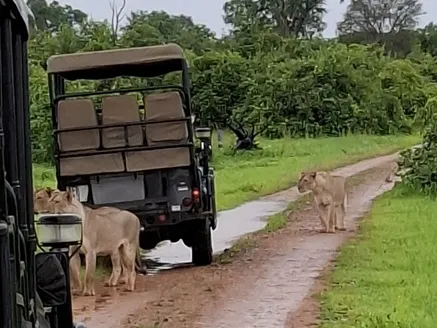
In October, my best friend proposed a Christmas road trip to the most beautiful game park in Africa. It had been a decade since my last visit to South Luangwa National Park, in eastern Zambia, and I still had memories of the leopard stalking around our vehicle; the hyenas laughing in the darkness at night; and the spotlight reflecting the big bright eyes of the bush baby high up in the trees. How could I refuse?
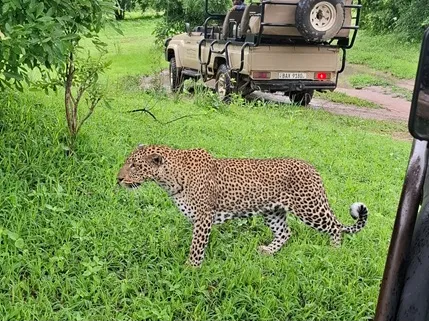
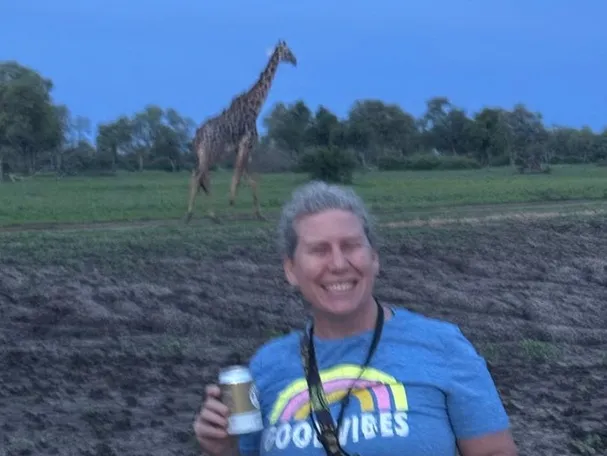
I was holding my breath when I took this photo.
A Zambian safari in December is magical.
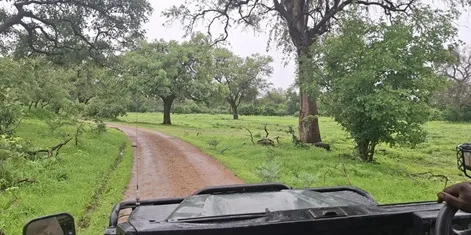
At the start of the rainy season, the park is in peak emerald season, with the landscape blanketed in brilliant shades of green. A safari in December almost guarantees lion sightings. (Cats hate to get their feet wet and stick to the roads.) And to top it off, my friend had secured the most coveted accommodation, a beautiful private home next to the park gates, known for elephants walking through the yard. (Check it out here.)
The catch: As a digital nomad, I need consistent online availability.
Usually, I completely unplug for a safari vacation. However, now that I work in tourism, I needed to be available for customer questions and last-minute bookings. While I didn’t have to be available 8 hours a day, I needed to be reachable by phone and have access to our web platform when needed.
Here’s the questions I asked before I went on safari.
I already knew that safari drives in the game park are usually 6-10 am and 4-8 pm, the times when animals are most active. This allowed for a nice block of down time each day to monitor work communication at the house. It was up to me to make sure I was fully prepared for anything that could cut me off from communication during those hours.
Could I work remotely the other hours of the day?
- What is the source of electricity?
I asked three questions about electricity before my trip:
- What is the main source of electricity?
- What is the backup power source?
- How many hours a day is electricity available?
To perhaps state the obvious, there are no ugly electric poles spanning across the pristine game parks. We stayed across the Luangwa River, just outside the game park. Our rented house had connection to the national power grid, which is spotty at best, and an inverter as the back-up power supply.
This arrangement was likely better than working remotely from a lodge inside the park, where generator power is the norm. Lodges often limit the hours of generator use, turning them off at a specified time at night (e.g., between 10 pm – 5 am). By staying in accomodation outside the game park, I could expect 24 hours of electricity.
2. What are my internet options?
I asked three questions about internet connectivity before my trip:
- What is the internet service provider at the accommodation?
- Where is internet available on the premises?
- What are the mobile networks that get service in this area?
I planned for two internet options: the internet service provider at the property and my own mobile phone network. Happily, I found out that our accommodation had Starlink, currently the most reliable internet service in Zambia (as of 2026). It was available in the main house but didn’t reach the cottage where I would be staying. Earlier in the year, I had relied on Starlink when I lived on a boat in the South China Sea for seven days, so I felt comfortable that I would have consistent internet access with Starlink in the Zambian bush. Of course, this is Zambia, so keep reading to see how it ended up.
As internet backup, I had two sim cards with internet bundles in my phone. Because our safari home was located outside the game park, it had phone reception for both major phone networks – MTN and Airtel. (In contrast, lodges inside the park are far from phone towers and often off network.) This backup option was sufficient for my work, noting that I don’t require fast internet connectivity like someone working in tech.
3. Is there a safe place to store my electronics?
I had two concerns about storage: Theft and weather.
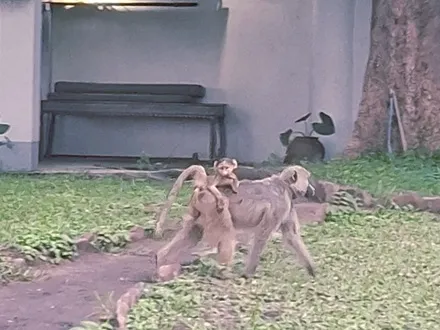
As funny as it sounds, my theft concern had nothing to do with people but instead with primates. Curious baboons or monkeys will literally leap at the chance to invade any room given an open door or window. It was hysterical the time a vervet monkey ran out of someone’s safari tent covered in toothpaste; not so funny if one runs out of my cottage with my shiny hard drive.
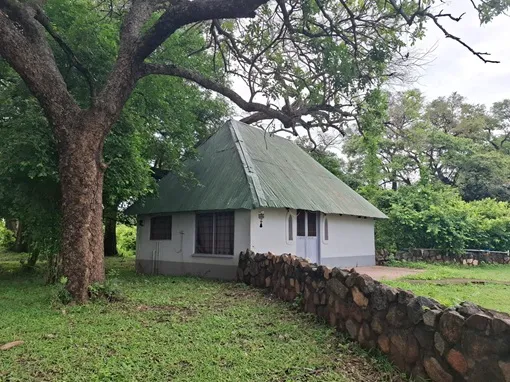
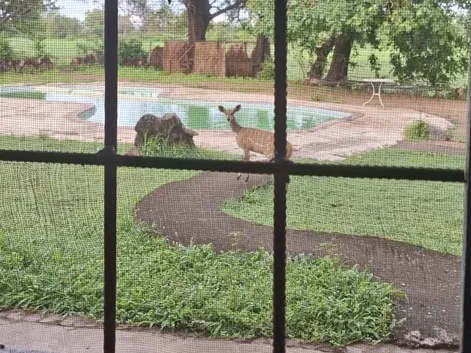
At our accommodation, the screened windows couldn’t be opened, so there was no chance of accidental entry by the troupe of resident baboons. The house staff had very clear rules about the importance of keeping doors shut, and I made sure to hide my electronics away from sight just in case.
Second, I was concerned about keeping my electronics dry. Safari accommodation is usually designed for air circulation with open (yet screened) windows, canvas tenting, or thatched roofs. Because we stayed in a private country-style house, rather than a hotel, our accommodation didn’t have room safes or wardrobes to store my laptop. It would be up to me to make sure my electronics stayed dry at all times.
Here’s the challenges I faced while working remotely on safari vacation.
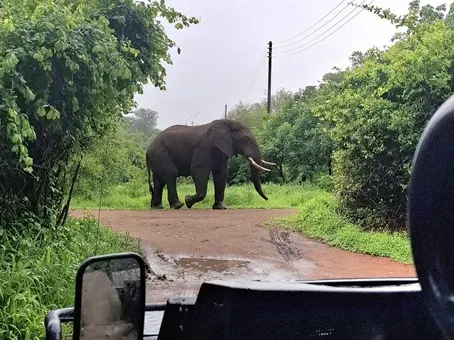
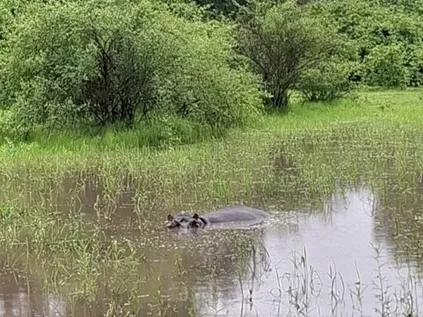
Let’s start with the positive: The game drives in the park were fabulous, and even in our house outside the park, the animals came to us. Hyena laughed outside at night; the resident elephant quietly walked down the driveway; and baboon babies wrestled by the pool. However, from a digital nomad perspective, the trip definitely had its challenges.
Internet outage:
The Starlink worked perfectly on the day we arrived, but on the second day, a massive storm blew a fuse and flooded the Starlink hook-up outside. Electricians came to restore the electricity, but the Starlink installation expert was not available over the holiday week. As a result, we did not have any Starlink connection at the house for the remaining 5 days. Luckily, I used my preloaded internet bundles on my local sim cards (Airtel and MTN) to hotspot. Those carriers reliably provided me with relatively stable internet during the week, although there were some short outages and it was not as fast as I’d liked.
Few electrical outlets:
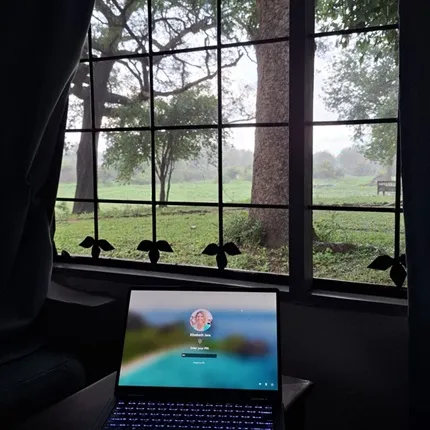
When the electricity from the national grid went out, the inverter automatically came on, but not all electrical outlets in the house had electricity on the inverter. When my laptop power ran low, I had limited places to sit and work. The main house was open plan without many outlets near seating. In my cottage, the outlet placement was near the bed, and my laptop cord didn’t reach across the room to the couch and table. I wished I had a way to extend my battery life to avoid being tethered by a cord.
After the safari, I purchased the Anker Laptop Power Bank. Next time, I can work for more hours and sit wherever I want without relying on a wall outlet. I chose this power bank because it can charge four devices at once (my laptop, my tablet, and my two phones) and is airline carry-on friendly. Buy it on Amazon here (paid link).
Rain:
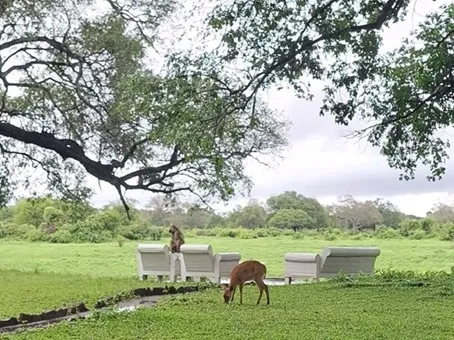
It rained daily on our vacation, with powerful thunderstorms blowing rain sideways at times. My cottage had 3 walls of screened windows without shutters, so there wasn’t a way to block rain blowing into the room. While the room didn’t flood, it was a bit misty and damp during the storms.
I found one corner furthest from the windows where I could place my items on a shelf off the floor and away from the spray. I put my electronics into my backpack and draped my garbage bag raincoat over the top as extra protection.
Working remotely on safari worked for me, to an extent.
In the end, I was successfully able to receive daily communication while working remotely on safari. I was able to check emails and receive WhatsApp messages, and I had fast enough mobile network to login to our web software.
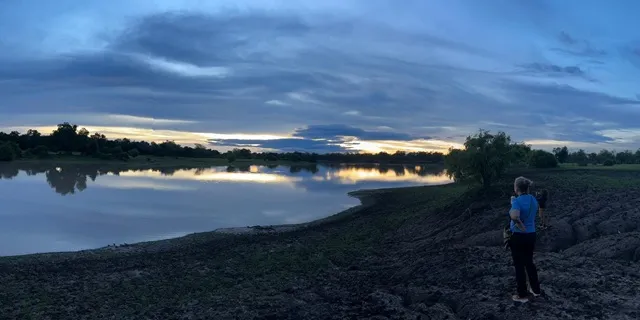
To be honest, I didn’t get very much work done. After all, it was a vacation full of the usual temptations – afternoon naps, day-drinking, and quietly gazing at the animals grazing outside my window. This vacation reminded me of why South Luangwa National Park ranks highest on my list of the best safari experiences in Africa.
For digital nomads planning a trip to Zambia, I wouldn’t recommend working remotely while on safari. Too much can go wrong, and the result is often stress instead of adventure. After all, the ability to completely unplug in the bush is what makes Zambian safaris so special.
Happy travels!
Have you worked remotely on safari in Africa? Leave a comment here or on our Instagram @themoviousmzungu and let us know how it went for you.
Other useful travel tips for a Zambian vacation:
After 20 years traveling in Africa, I still use Lonely Planet as my updated source of information. The latest Lonely Planet Zambia edition is from 2022 and includes ample information about safari options and more. Buy it on Amazon here (paid link). I’ve added a few of my personal tips below to help you plan.
What did I pack for the safari vacation?
For work, I carried my laptop, converter plug, headphones, two phones (each one with a sim for a different mobile network), and a phone power bank. I put the documents I needed onto a hard drive in case I can’t access the cloud. I packed all of these in plastic bags to protect them from rain and dirt.
I packed a light backpack with long pants (a barrier against mosquitoes), t shirts, a sports bra for the bumpy roads, insect repellant, and sunblock. I didn’t have any rain gear so I improvised with a garbage bag and pool towel. It was a cute look (wink.) Zambia doesn’t have luggage storage places like you would find in Europe or Asia, but I was able to leave a suitcase behind with a friend in the city.
I wish I had my own binoculars, but those aren’t practical enough to take up valuable luggage space in my digital nomad life. Luckily, my friends, longtime residents of Zambia, carried their binoculars, bird books, and coolers which we filled with bubbly and snacks for our game drives.
How do you get to South Luangwa National Park?
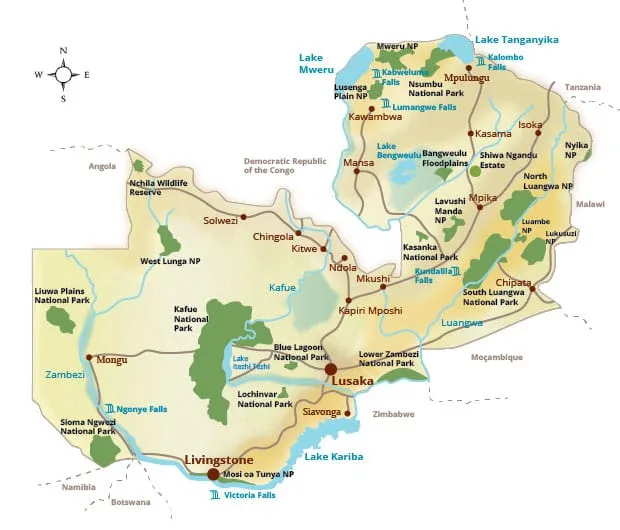
South Luangwa National Park is about 700 km from the Lusaka, the capital city. There are daily flights from Lusaka to the park (check options with Proflight and Zambia Airways.) As a cheaper option, there are daily buses from Lusaka to Chipata, the provincial capital of Eastern Province. Buses leave hourly from Intercity Bus Terminal, starting as early as 4am for an 8 hour drive. It’s best you go to the bus station a day or two before your trip to buy your ticket. In Chipata you would need to organize a taxi to take you the last 150 km to Mfuwe, the town by the park entrance, which is about a 2.5 hours drive on a tarmac road.
When is the best time to visit South Luangwa National Park?
The most popular time to visit South Luangwa National Park is between April to October, when the bush roads are dry. We went in December, the first month of the rainy season and the end of the safari season. Zambian safari companies close shortly after the start of the rains because roads become impassable. We saw less of the park due to flooded roads, but we were able to see almost everything – lions, leopards, hyena, elephant, buffalo, giraffe and so much more.